Home Blog Page 4

Over the Baltic Sea, Polish MiG-29s intercept a Russian spy plane that is flying “dark.”

0

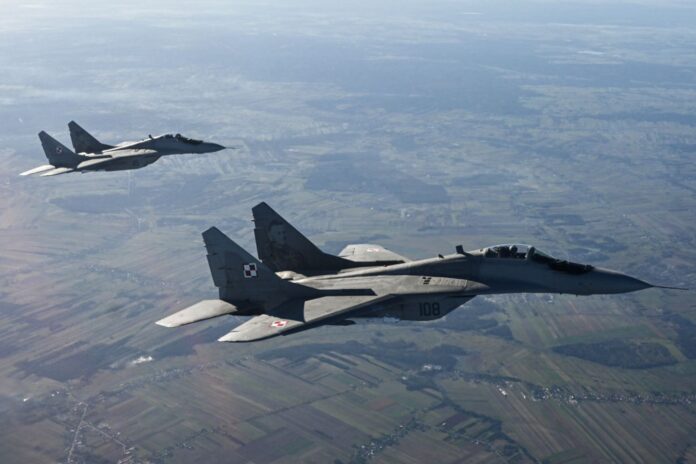
Polish Air Force MiG-29 fighters intercepted and escorted a Russian Il-20 reconnaissance aircraft flying over the Baltic Sea, Army Recognition reported on March 13.

Poland’s Operational Command confirmed the Russian spy plane was operating in international airspace with its transponder switched off and without a field flight plan. Polish fighters quickly scrambled to visually identify and escort the aircraft, marking the ninth such Russian reconnaissance mission detected in the region so far this year.

The Il-20, designated by NATO as the “Coot-A,” is a specialized surveillance platform built specifically to harvest electronic intelligence. Rather than attempting to breach physical borders, the aircraft’s objective is to absorb data on NATO radar activity, radio communications, and quick-reaction scramble times.

By flying “dark” near sovereign airspace, Moscow forces NATO to react, allowing Russian intelligence to actively map the alliance’s defensive architecture and command-and-control networks, Army Recognition wrote.

The Baltic Sea remains a highly sensitive frontline for this type of electronic probing. The airspace links directly to the heavily fortified Russian enclave of Kaliningrad, where Moscow maintains dense anti-access and area-denial (A2/AD) capabilities.

Monitoring this specific corridor allows Russia to constantly test the military geometry of NATO’s eastern flank, an area that has become even more critical following the recent integration of Swedish and Finnish forces into the alliance, according to Army Recognition.

While the Russian aircraft never violated Polish airspace, the successful intercept proves the continuing effectiveness of Poland’s legacy MiG-29 fleets in securing the skies. Military officials stressed that rapid interception missions are necessary to eliminate ambiguity, maintain absolute control over the air picture, and prevent Russian gray-zone tactics from escalating into direct confrontations.

Russian intelligence-gathering operations and airspace provocations along NATO’s eastern flank intensified dramatically over the past few months. Throughout late 2025 and early 2026, allied fighter jets routinely scrambled to intercept Russian bombers, reconnaissance planes, and tactical fighters flying dark over the Baltic Sea.

A recent report detailed how these unannounced flights deliberately force NATO to activate its Quick Reaction Alert network, allowing Moscow to map allied radar frequencies and command-and-control response times.

Currently, as Russia continues to deploy specialized spy planes and heavily armed bombers near sovereign borders, European defense officials are pushing to streamline NATO engagement rules to better protect the highly sensitive corridor connecting Kaliningrad and the newly expanded Nordic alliance.

Russia’s New War Strategy Replaces Missiles with Low-Cost Mass Drone Production

0

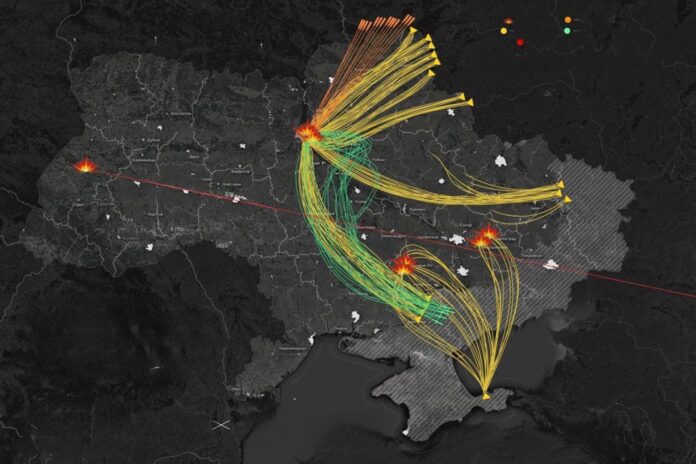
Russia is cutting back missile production and redirecting resources toward a major expansion in drone manufacturing, according to the New York Post on March 16.

Ukrainian President Volodymyr Zelenskyy framed the shift as part of a broader race to dominate the next phase of the war, as Moscow leans harder on cheaper mass-produced drones while Ukraine presses for deeper cooperation with Washington on air defense and drone manufacturing.

In the same interview, Zelenskyy told them that Kyiv is ready to help the US counter Iranian-style drone threats, arguing that Ukraine’s battlefield experience now has global relevance.

The reported pivot reflects both cost and scale. Zelenskyy has warned that Russia has already launched more than 57,000 Shahed drones at Ukraine, while intelligence reviewed by Kyiv indicates Moscow has ordered up to seven million FPV drones this year.

That follows Ukraine is preparing its own production on a comparable scale, underscoring how the war is increasingly being shaped by industrial drone output rather than missile stockpiles alone.

“This is what we are seeing. Their order is seven million FPV drones. We also have seven million planned,” Zelenskyy stated, describing what he presented as a direct signal that Russia is channeling money and production capacity into unmanned systems at a faster pace.

The shift also carries strategic implications beyond Ukraine.

As fighting in the Middle East exposes the difficulty of stopping large drone swarms with costly traditional interceptors, Kyiv is pitching its low-cost counter drone experience as a model for Western partners.

This aligns with Zelenskyy’s warning about Russia’s production changes, suggesting the drone expansion reflects both battlefield adaptation and broader capacity growth.

This dynamic is already translating into procurement decisions among Ukraine’s partners.

The Pentagon-backed selection gives the Ukrainian manufacturer a new foothold in the US defense market, turning a battlefield-proven FPV platform into a product with formal procurement traction inside the American military system.

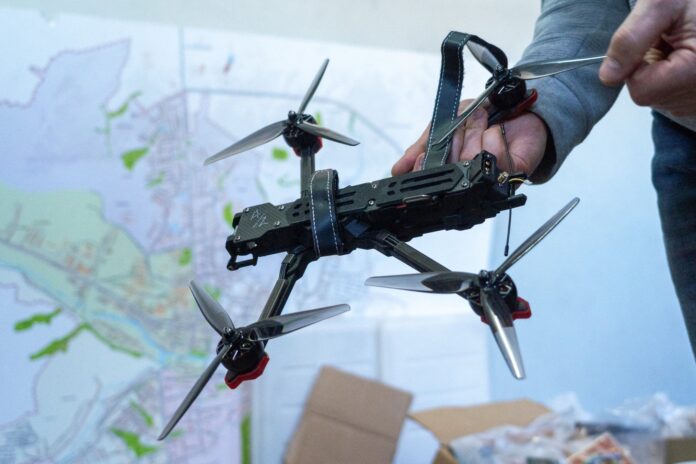
The company’s quadcopter advanced through the Drone Dominance program after demonstrating combat utility in Ukraine, where FPV drones have become one of the war’s defining tools for low-cost precision strikes.

That track record appears to have helped convert operational credibility into a contract signal from Washington.


Iran’s senior security officer, Ali Larijani, was targeted by Israel, according to a source.

0

Israel targeted Ali Larijani, the head of Iran’s Supreme National Security Council, in a Tehran strike on Monday night, according to an Israeli source familiar with the matter.

The Israeli military is still awaiting the results of the strike, known as a battle damage assessment, to determine if Larijani was killed.

On Tuesday morning, Israel Defense Forces (IDF) Chief of Staff Lt. Gen. Eyal Zamir said, “We recorded significant achievements in Iran last night.”

The Israel Defense Forces (IDF) carried out a wave of simultaneous strikes on Monday evening against the cities of Tehran, Shiraz and Tabriz. The IDF made no mention of targeting Larijani, instead naming missile production sites and command centers as the goals.

“Alongside the ongoing damage and erosion of military capabilities and industrial production capacities, we are acting against elements of the Revolutionary Guards and the regime’s repression apparatus,” Zamir said at a situation assessment.

Israel also targeted senior figures in Palestinian Islamic Jihad, an Iran-backed militant group in Gaza, in a separate attack a few days ago, the Israeli source told CNN.

Drones and missiles launched against the US embassy in the most recent Iranian conflict Trump acknowledges being “shocked” by the Iranian assaults

0

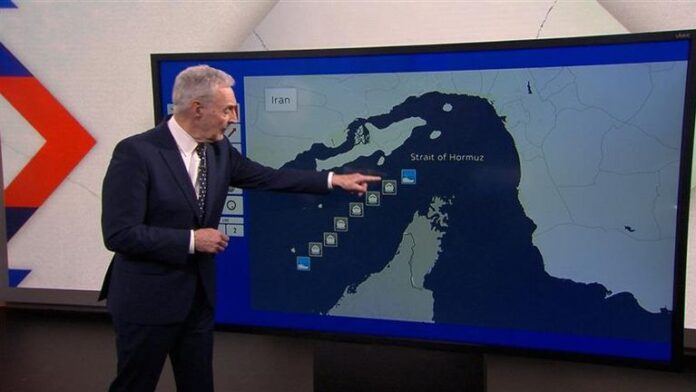
The US embassy in Baghdad has been targeted by explosive drones, and another tanker has been hit near the UAE, which had to close its airspace overnight due to threats from Iran. Follow the latest.

Real Madrid is after Michael Olise, while Chelsea leads the fight for Messi.

0

The January transfer window is now little more than a dot in the rearview mirror and as such European football has got back to the business of winning games and challenging for as much silverware and success as possible between now and the end of the season. However, as all football fans know, the rumour mill never truly sleeps and while the summer transfer window may be many months away, there are still plenty of top stories to dig into in the meantime.

Managers will be constantly assessing their squads with sporting directors and recruitment staff scanning the market for potential deals this summer. The Rumohr mill is still gathering pace and we’ve collated some of the biggest current transfer stories – you can access the full Rumohr mill below.

Today’s biggest transfer stories

Market Value

Michael Olise

M. OliseRight Winger
130.00m

Real Madrid are planning an ambitious summer move for Michael Olise, according to Bild. The 24-year-old has been outstanding since moving to Bayern Munich to earn the reputation as one of the best wingers in the world but the Bundesliga giants won’t sanction his sale.

Market Value

Rayane Messi

R. MessiLeft Winger
1.00m

Chelsea are lining up Messi, but not Lionel. The Blues are in pole position to sign Strasbourg talent Rayane, who is currently on loan at Neom in the Saudi Pro League. Chelsea’s ownership controls the Ligue 1 side but Messi also has interest from Barcelona, PSG and Bayern Munich.

Market Value

Pedro Porro

P. PorroRight-Back
40.00m

Manchester City are reportedly weighing up a move for Pedro Porro. It’s understood that City are in the market for a natural right-back in the summer and Porro will look to leave Tottenham, if they are relegated from the Premier League.

EU Commissioner Warns Russia May Field Up to 9 Million Drones by 2026

0

Russia could deploy between 7 million and 9 million drones in 2026, according to European Commissioner for Defense and Space Andrius Kubilius on March 16.

Speaking at the Forum Europa event, Kubilius cautioned that Russia’s military spending is approaching the European Union’s combined defense budget when measured in purchasing power parity terms.

He framed the figure as a reminder of how rapidly Moscow is expanding its war-making capacity.

Kubilius noted that Russia is spending around 85% of the EU’s total defense budget under that calculation.

He added that the Kremlin is also preparing to field millions of drones next year, underscoring the scale of the threat facing Europe and Ukraine.

“We need to remember that Russia is spending on its military, in purchasing power parity terms, around 85% of the entire defense budget of the European Union,” Kubilius stated. “It is also ready to use between seven and nine million drones in 2026.”

His remarks come as European officials push for faster defense production, greater military coordination, and stronger long-term support for Ukraine amid Russia’s continued full-scale war.

European officials now believe they could replace most US intelligence support for Ukraine within months if Washington scales back, as contingency planning expands across the continent amid fresh doubts about American commitments.

French President Emmanuel Macron had already indicated that France provides roughly two-thirds of the intelligence backing Ukraine depends on, while other allies have widened surveillance, reconnaissance, and analytical support.

Officials familiar with the discussions noted that Ukraine’s dependence on US intelligence could be sharply reduced, though not fully eliminated, and that the impact of any pullback would be less severe than a year ago.

When Washington briefly paused intelligence sharing and weapons deliveries, other partners stepped in to cover part of the shortfall, while Kyiv leaned more heavily on drones and accelerated domestic weapons production.

Still, European capitals acknowledge intelligence is only one area where they can move faster, while air defense, satellite surveillance, strategic transport, secure communications, and other critical capabilities remain far harder to replace.

One of the largest international Counter-Strike tournaments is won by the Ukrainian esports team NAVI.

0

Ukrainian esports organization Natus Vincere (NAVI) won the international ESL Pro League Season 23 tournament in Counterstrike 2, defeating Aurora Gaming in the grand final held in Stockholm.

According to NAVI, the Ukrainian roster secured the championship after winning the final series 3:1 in maps. The decisive matches took place on March 15 as part of the tournament’s final stage.

In the best-of-five series, NAVI opened the match with a win on Mirage (13:7). Aurora responded on Anubis, taking the map 13:11. The Ukrainian team regained control on the next two maps, winning Nuke (13:8) and Dust II (13:9) to secure the championship title.

The victory earned NAVI $100,000 in prize money and improved the team’s position in the global ranking maintained by Valve, the developer of Counterstrike 2. According to coverage of the tournament results, the title is the organization’s first trophy of 2026 and marks its return to winning at the top competitive level.

ESL Pro League is one of the most prominent competitions in professional Counterstrike, bringing together leading teams from multiple regions. Season 23 lasted more than two weeks and featured dozens of teams competing for the championship.

According to match reports cited by Ukrainian media, NAVI reached the playoffs after advancing through earlier stages of the tournament with a 3–2 record, narrowly avoiding elimination before improving their performance in the knockout rounds and advancing to the grand finale.

NAVI remains one of Ukraine’s most recognized esports organizations and has previously won multiple international tournaments. The team claimed major Counter-Strike titles including PGL Major Stockholm and PGL Major Copenhagen and historically won The International 2011 in Dota 2.

Since the start of Russia’s full-scale invasion of Ukraine, members of the organization have also participated in fundraising initiatives supporting the Ukrainian military. Ukrainian media previously reported that in 2024 NAVI donated five million hryvnias for robotic and drone systems used by the Armed Forces of Ukraine.

Khamenei’s plane is struck by an Israeli strike at Mehrabad Airport in Tehran.

0

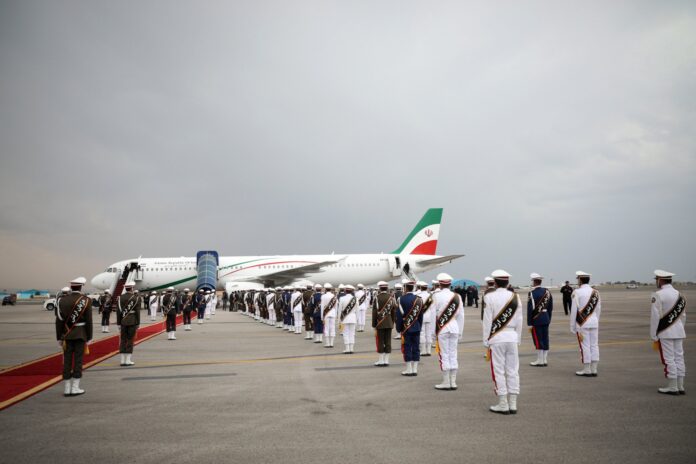
Israel stated it destroyed an aircraft used by Iran’s leader at Tehran’s Mehrabad Airport during a strike overnight on March 16, according to the Israel Defense Forces on X on March 16.

The Israeli military reported that the aircraft belonged to the Iranian leadership and was targeted in a focused overnight operation at the airport in the Iranian capital. It identified the plane as one used by Ali Khamenei and other senior Iranian officials.

According to the IDF, the aircraft was used by Iranian regime officials and military figures for weapons procurement and for maintaining ties with countries in the so-called “axis” through domestic and international flights.

Israel stated that destroying it would weaken Tehran’s ability to coordinate with allied states and expand its military power.

“The destruction of the aircraft harms the ability of the Iranian regime’s leadership to coordinate with the axis countries, build military power, and restore the regime’s capabilities,” the IDF wrote in its statement on X.

The Israeli military described the plane as another strategic asset removed from Iran’s arsenal and indicated it would continue operations against Iranian military assets. The claim has not been independently verified in the provided source.

The development comes as Britain and other allies assess signs of deeper military coordination between Moscow and Tehran.

British officials warned Russia may be covertly helping Iran in its confrontation with the US and Israel, pointing to attack patterns that echo drone tactics honed during the war in Ukraine.

Particular attention centered on strikes against coalition bases in Iraq and Cyprus, where the methods reportedly resembled the kind of drone operations Russia has faced and refined against Ukraine.

For Britain, the warning underscores how Russia’s war on Ukraine continues to shape security crises far beyond the front, linking European combat experience to wider regional escalation.

Ancelotti: “Why has Madrid changed? It wasn’t just Kroos for Mbappé”

0

The Italian coach was the protagonist on Monday in La Tribu de Radio MARCA on the occasion of the 25th anniversary of the sports radio station

Carlo Ancelotti (Reggiolo, 1959) ended his spell as Real Madrid coach last summer. He did so as the most successful coach in the club’s history and leaving an indelible legacy. However, ‘Carletto’ was waiting for one of the few challenges he had yet to face in his legendary career: to manage a national team. Brazil insisted and convinced him to seek the long-awaited sixth World Cup.

On the occasion of Radio MARCA’s 25th anniversary, the sports radio station travelled to the CBF headquarters to recognize the career of the Italian coach. During the interview, Ancelotti spoke about his first few months in Brazil, his relationship with Real Madrid, his contact with the club’s players, the evolution of football in recent decades and his views on players such as Vinicius and Valverde.

Thank you for opening the doors of your new home to us. There is more color than in Valdebebas, the Brazilian spirit is very different from that of Madrid.

The office in Valdebebas was much bigger, but different. Here there are many colors, a lot of joy

When you leave Madrid after winning the Champions League, you can only come to Brazil.

Yes, I think so. I didn’t have the idea of going to another club after Madrid. The opportunity with the Brazilian national team came up two years ago and then I renewed with Madrid, but last year we thought it was time to leave and now I’m happy.

What did the largest political gathering in China teach us?

0

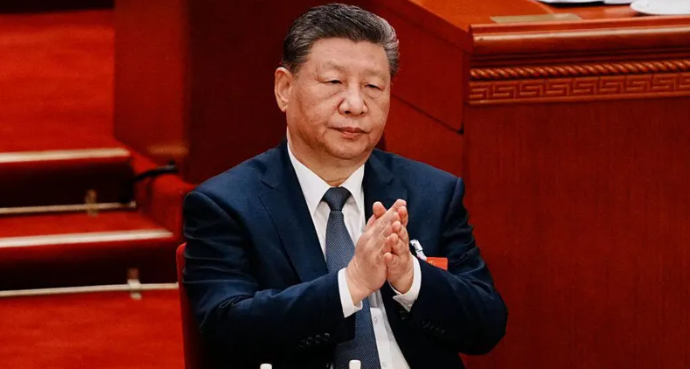
China’s biggest political gathering – the National People’s Congress or NPC – has come to an end.

Its extensive authority includes making laws, amending the constitution and approving state budgets. But it effectively functions as a rubber-stamp parliament, approving decisions made behind closed doors by the top echelons of the Chinese Communist Party.

Still, the annual meetings of the NPC and the Chinese People’s Political Consultative Conference (CPPCC) – also known as the “two sessions” – are watched closely as they signal the priorities of the world’s second-largest economy.

Our correspondents give us their biggest takeaways.

China wants to show it is a beacon of stability

By Laura Bicker, China correspondent

China’s push to be the world’s leading superpower depends largely on one key thing – President Xi Jinping’s ability to manage his economy.

To achieve this, Xi appears to be seeking more certainty as he tries to balance the books in a very uncertain world dominated by an unpredictable US president and a war in the Middle East.

His policies to try to encourage Chinese people to spend more money are aimed at stabilizing a stuttering domestic economy.

His push for technological supremacy is a bid to win the future and get others to come to China’s door for the latest factory robots or AI models.

His continuing push toward increasing China’s production of renewable energy will allow the country to be more self-reliant. It no longer needs as much oil and gas from other countries including Iran.

And then of course there is the choreography of such a major political event, from the practiced pitch of the band, to the diligence of delegates who sit and listen to speeches and even turn pages in perfect unison.

The quiet, heavily controlled and carefully scripted statecraft in the Great Hall of the People stands in contrast to a fiery White House which has rattled allies and shaken markets with its strikes on Iran.

The Chinese Communist Party is trying to show that it is a beacon of stability that is in the business of fixing its economy and future.

Xi will feel China is already in a strong position after fighting back against US tariffs in a trade war that ultimately ended in a truce. China’s trade dominance is also attracting back former wary customers including the UK and Canada.

The geopolitical landscape is shifting, and Xi may see an opportunity for China to rise, as his rival in Washington is distracted.

But he will also know much depends on how his country navigates its own economic challenges in the years to come.

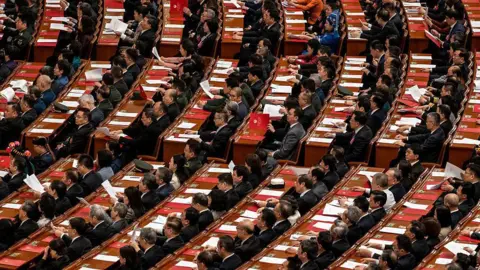
Getty Images Delegates listen to speeches at the closing session of the Chinese People's Political Consultative Conference (CPPCC) at the Great Hall of the People on March 11, 2026 in Beijing, China