
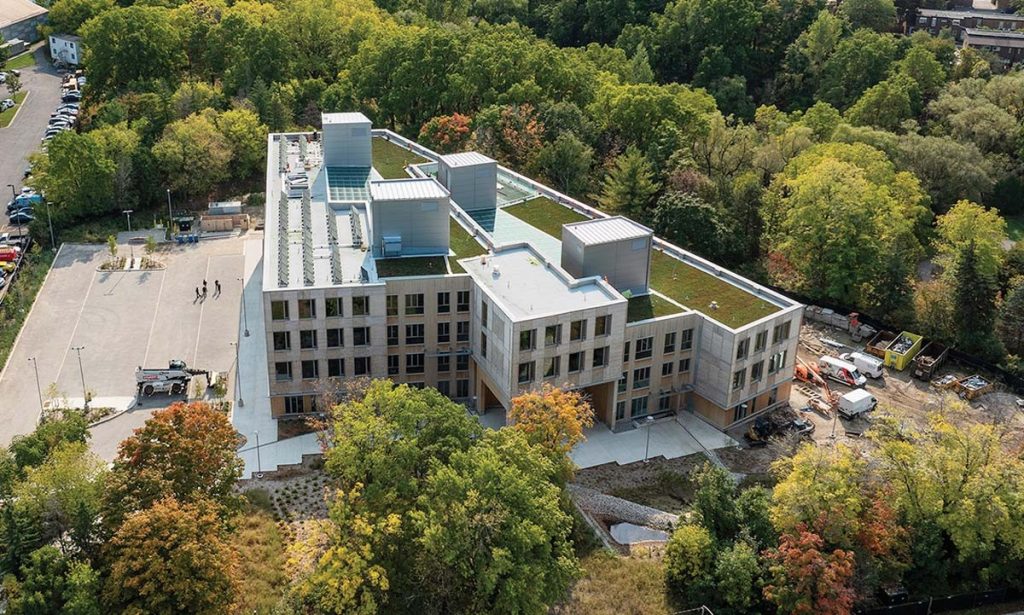
The American Institute of Architects’ Canada Society chapter has announced the recipients of its 2025 Design Awards.
Established in 2020, the AIA Canada Design Awards recognize exemplary work by AIA Canada members and emerging professionals. The program advances AIA Canada’s mission to promote architectural excellence and professional leadership, highlighting projects that demonstrate innovation, integrity, and meaningful contribution to the built environment.
The jurors for this year’s awards were Avery Guthrie (architect and principal at Teeple Architects), Ian Chodikoff (architect and founder of Chodikoff & Ideas), and Vivian Manasc (senior principal of Reimagine Architects).
The 2025 award recipients were announced at the organization’s Annual General Meeting on November 26, 2025. They include the following.
Architecture (Excellence)
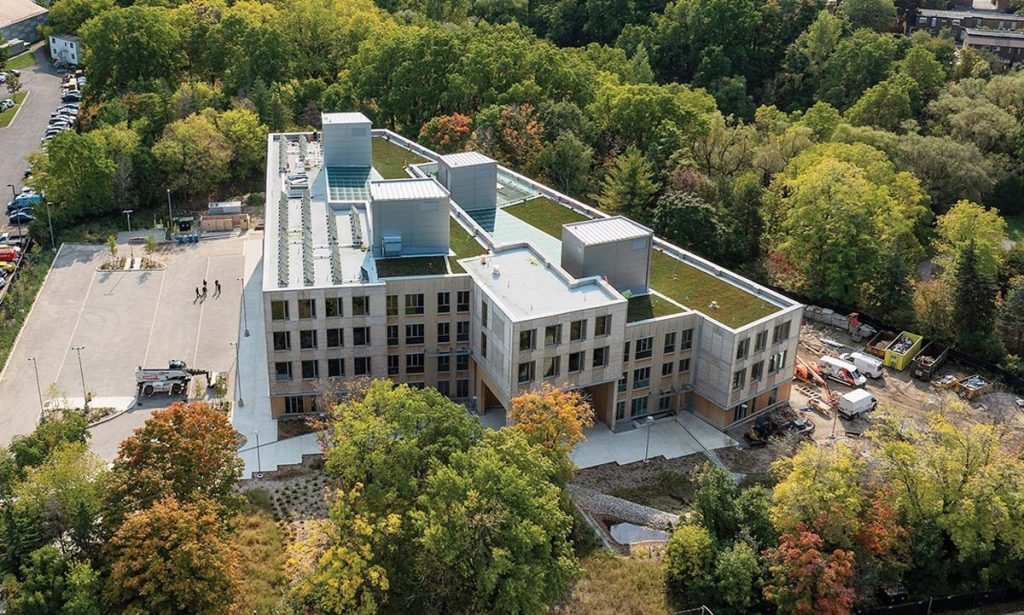
Toronto and Region Conservation Authority Headquarters, Toronto, Ontario by Bucholz McEvoy Architects, ZAS Architects
Set along Toronto’s Black Creek Ravine, the new TRCA headquarters is a four-storey, 86,000 sq. ft. mass timber building shaped by the ravine’s contours, with cascading floorplates and panoramic landscape connections. A wood-first, high-performance design integrates natural ventilation, solar chimneys, geothermal systems, and on-site stormwater strategies. Targeting LEED Platinum, WELL, and Zero Carbon certifications, the project embodies TRCA’s mission of environmental stewardship and watershed resilience.
Architecture (Merit)
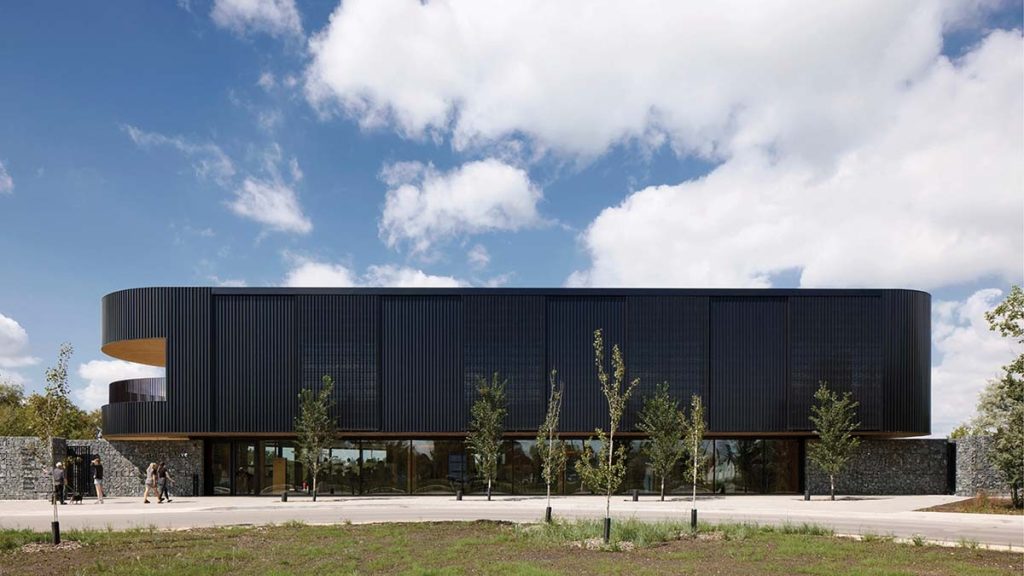
Buffalo Crossing Paul Albrechtsen Visitor Centre, Winnipeg, Manitoba by Stantec Architecture Ltd.
Located on the south shore of Muir Lake in Winnipeg, this 18,000 sq. ft. all-mass timber Visitor Centre serves as the gateway to FortWhyte Alive’s 660-acre nature campus. Designed for Winnipeg’s extreme climate, it has achieved the CaGBC Zero Carbon Building Design Standard and is targeting Passive House Certification. The transparent, triangular form maximizes solar exposure and views, expressing climate resilience, reconciliation, and environmental stewardship.
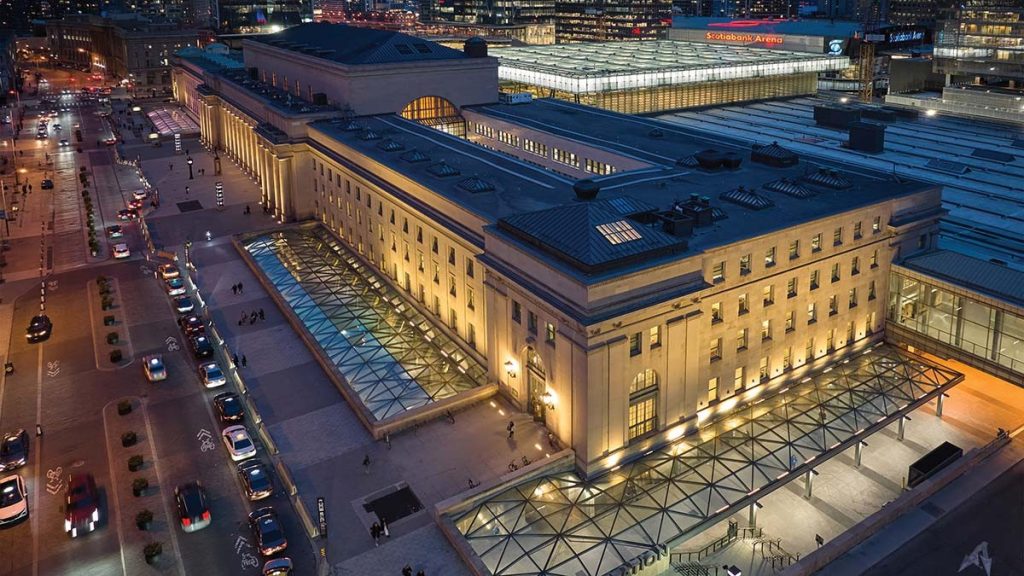
Union Station Revitalization, Toronto, Ontario, by NORR Architects & Engineers Ltd., EVOQ Architecture
Union Station, Canada’s busiest transit hub and a National Historic Site, underwent a comprehensive revitalization to accommodate growth from 60 to 130 million passengers annually. Spanning an entire city block, the project introduced over one million square feet of new and renewed space, including two 50,000-square-foot concourses flanking the heritage core. The restored Great Hall preserves its Beaux-Arts grandeur while modernizing circulation, functionality, and long-term civic resilience.
Architecture (Citation)
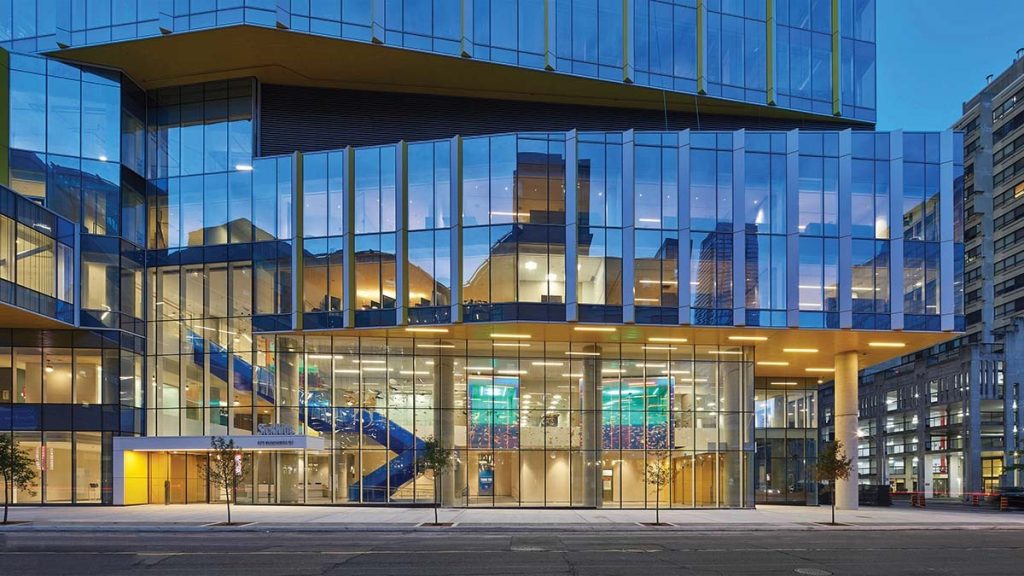
SickKids Patient Support Centre, Toronto, Ontario, by B+H
The 22-storey SickKids Patient Support Centre consolidates over 30 administrative departments into a dynamic hub supporting research, innovation, and staff well-being. Connecting the Clinical Hospital with the Peter Gilgan Centre for Research and Learning, the building integrates educational and wellness spaces around an inviting atrium and prominent feature stair. As SickKids’ first “smart building,” it enhances energy efficiency through advanced automation and achieved LEED v4 Gold NC Certification.
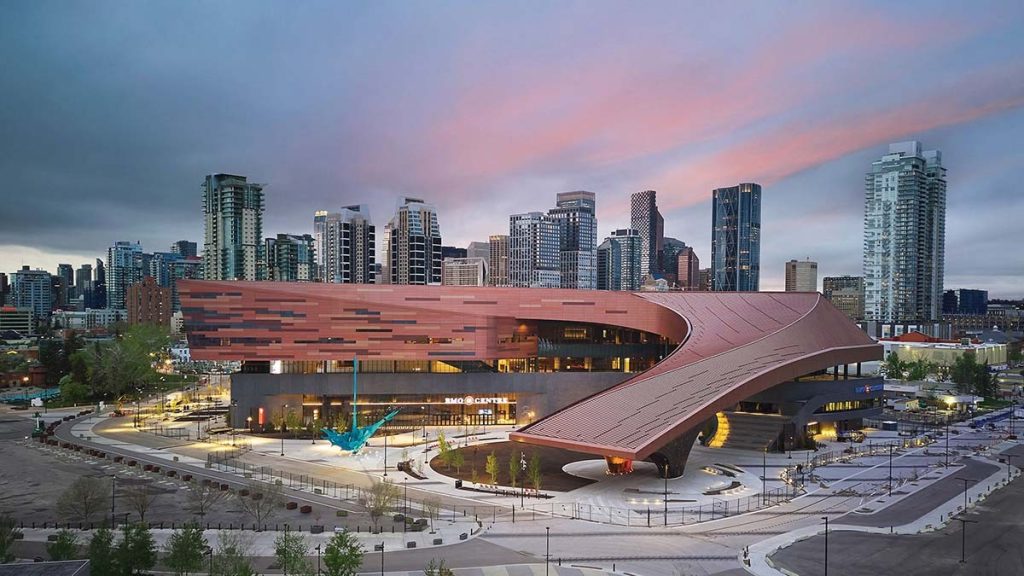
BMO Centre Expansion, Calgary, Alberta, by Stantec Architecture Ltd, S2 Architecture, Populous
The 565,000-square-foot BMO Centre Expansion revitalizes Calgary’s emerging Culture + Entertainment District as western Canada’s largest convention centre. Its iconic form evokes the local landscape and the spirit of the Calgary Stampede, while massive column-free ballrooms enhance functionality for large-scale events. Prairie motifs and traditional materials are reinterpreted throughout, positioning Calgary as a premier international meetings destination and reinforcing the building’s role as an ambassador for the region.
Residential (Merit)
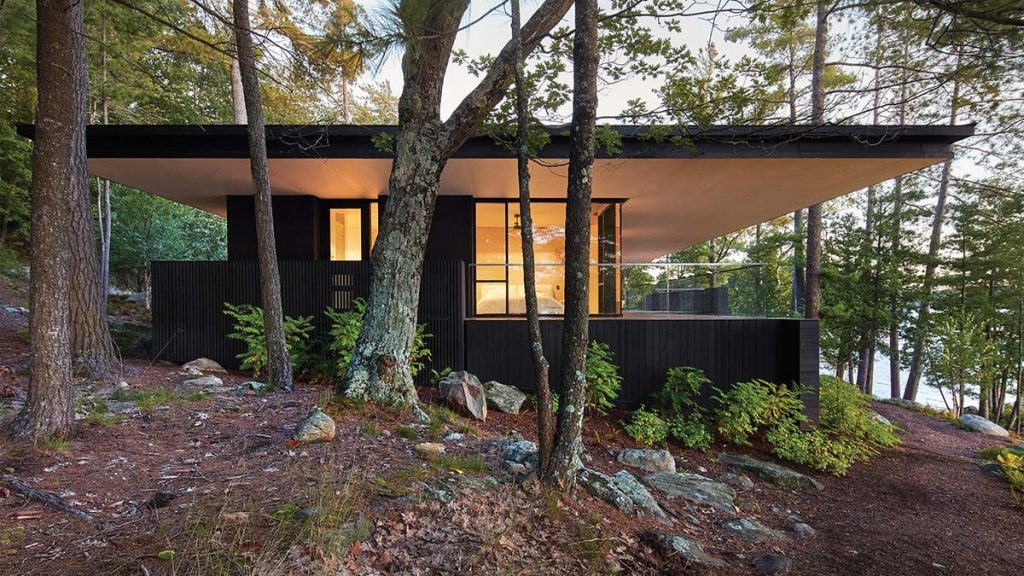
Sagamore North Cottage, Muskoka, Ontario, by Akb
Set near the water’s edge in Muskoka, this all-season island cottage is conceived as a private refuge immersed in northern Ontario’s landscape. Inspired by floating docks, planar walls and guardrails support a unifying cantilevered roof that extends living space outward. Dark cladding allows the structure to dissolve into the forest, while geothermal systems, deep overhangs, and operable glass walls enhance sustainability, natural ventilation, and year-round comfort.
Residential (Honourable Mention)
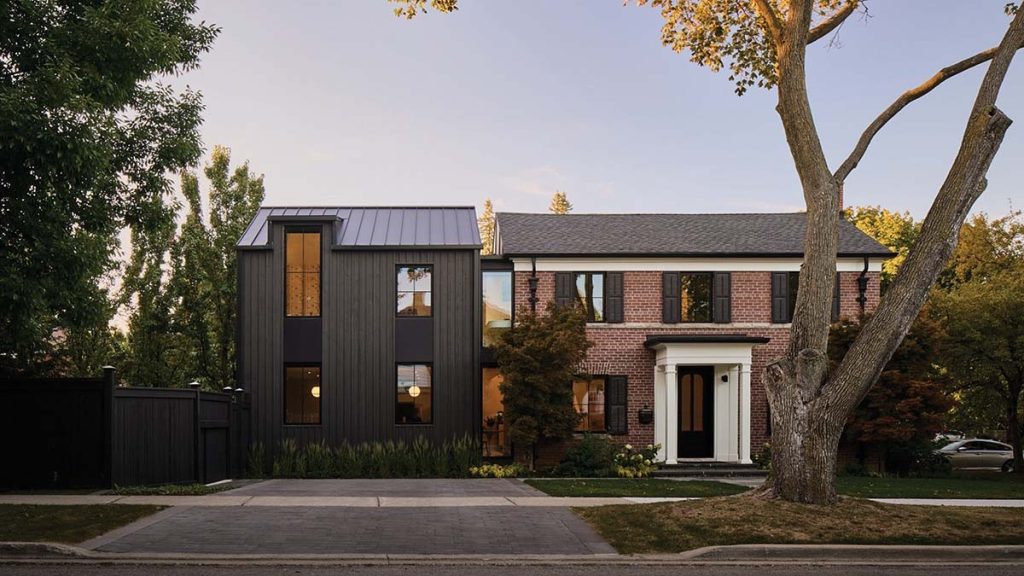
Bessborough Residence, Toronto, Ontario, by AAmp Studio
In Toronto’s Leaside neighbourhood, a 19th-century red-brick residence has been reimagined as a bright modern family home balancing heritage and renewal. A dark-gray board-and-batten addition, linked by a two-storey glass connector, maintains the integrity of both old and new. Expanded, light-filled interiors connect kitchen, dining, and living spaces to an outdoor patio, resulting in a “stealth modern” home that respects its past while supporting contemporary family life.
Urban Design (Merit)
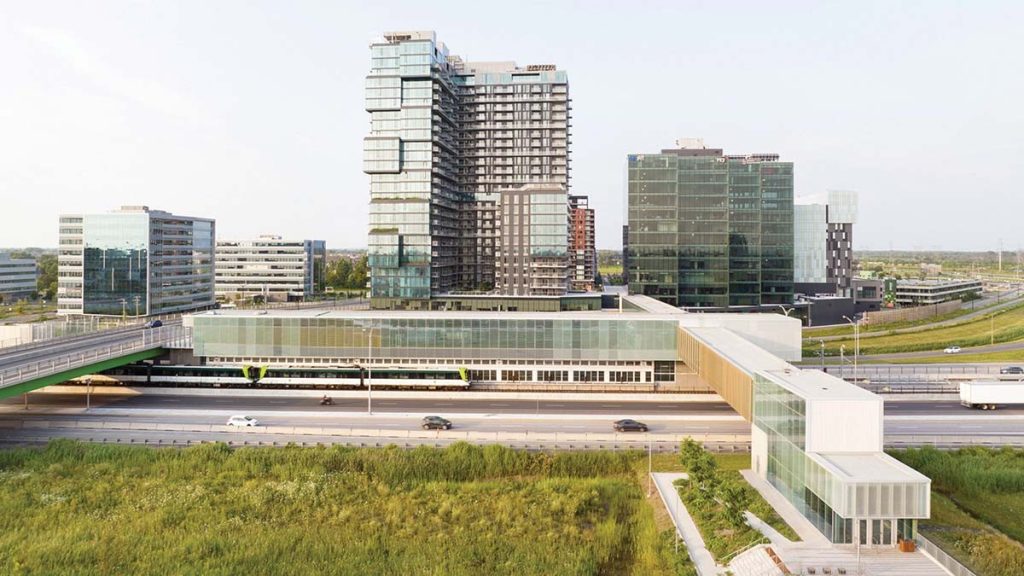
Réseau Express Métropolitain, Montréal, Québec, by Lemay, Bisson Fortin, Perkins&Will
The Réseau Express Métropolitain (REM) is an automated light metro network comprising 26 stations across 67 kilometres of Greater Montréal. Integrating signature architecture with thoughtful urban planning, the system balances a consistent identity with adaptability to diverse terrains and communities. Luminous canopies and landscape-responsive materials create recognizable civic markers, transforming transit infrastructure into meaningful public architecture that strengthens connectivity and fosters inclusive, sustainable urban growth.
Urban Design (Citation)
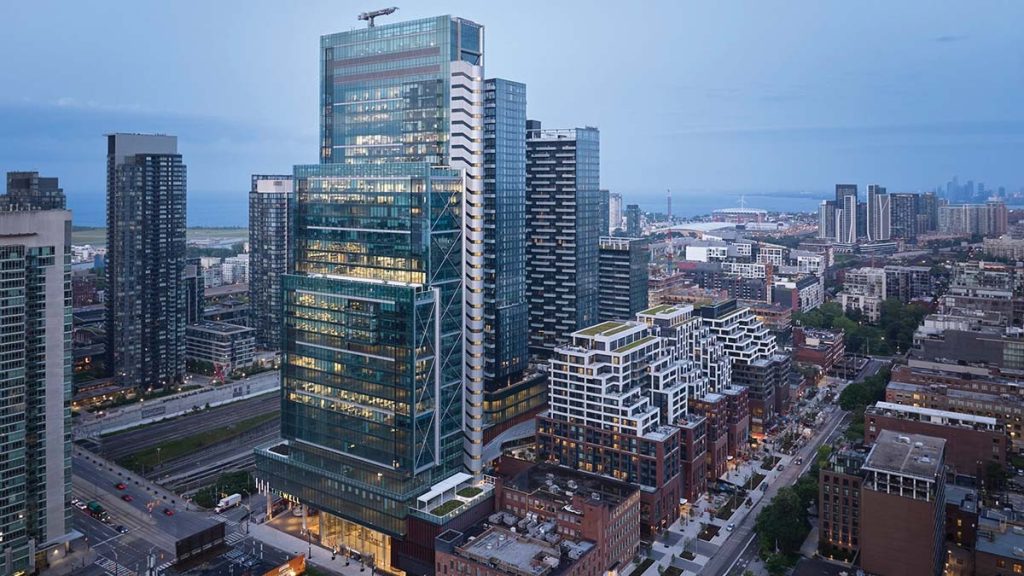
The Well, Toronto, Ontario, by Hariri Pontarini Architects, Adamson Associates Architects | BDP, CCxA | Architects-Alliance | Wallman Architects
The Well heralds a new mixed-use typology for Toronto, equally divided between commercial, retail, and residential uses on a 7.7-acre downtown site. Extending King West’s pedestrian network with porous connections, the development mediates between surrounding scales. Six residential buildings and an office tower are linked by an open-air, multi-tiered promenade beneath an undulating glazed canopy, framed by a colonnade and opening to a public amphitheatre programmed year-round.
Community Engaged (Citation)
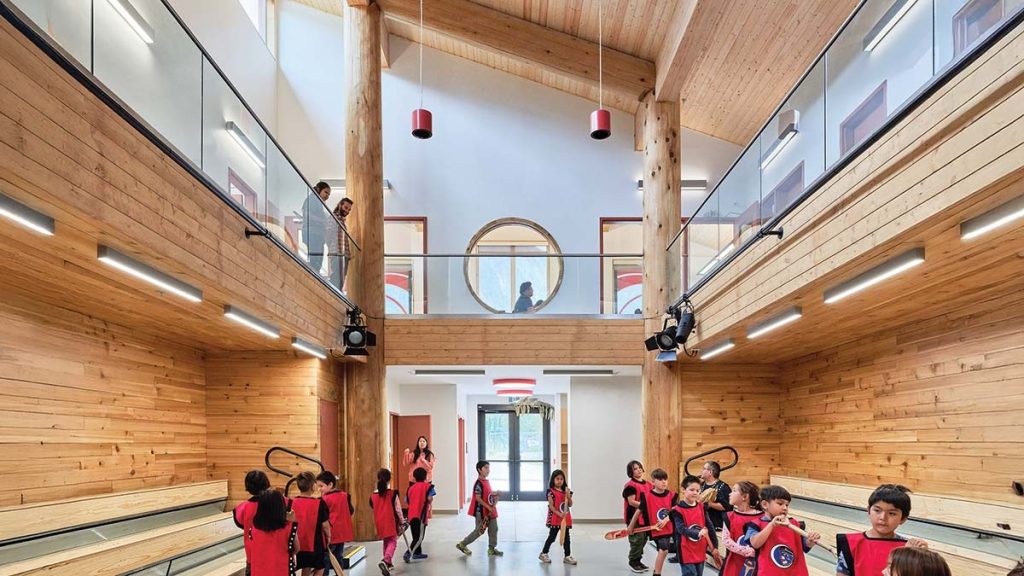
Nuxalk Asmayuusta Childcare, Bella Coola, British Columbia, by Mackin Architects Ltd.
Named ‘Asmayuusta’—the Nuxalk word for learning through the “3 L’s”: Look, Listen, and Love—this childcare and education building draws on the form of the traditional longhouse. Western red cedar from the Great Bear Rainforest, community-crafted artwork, and spaces for dance, story, and teaching embed Nuxalk knowledge in the architecture. Developed through deep community engagement, the project integrates culture, sustainability, and intergenerational learning as a living expression of care.
Unbuilt (Merit)
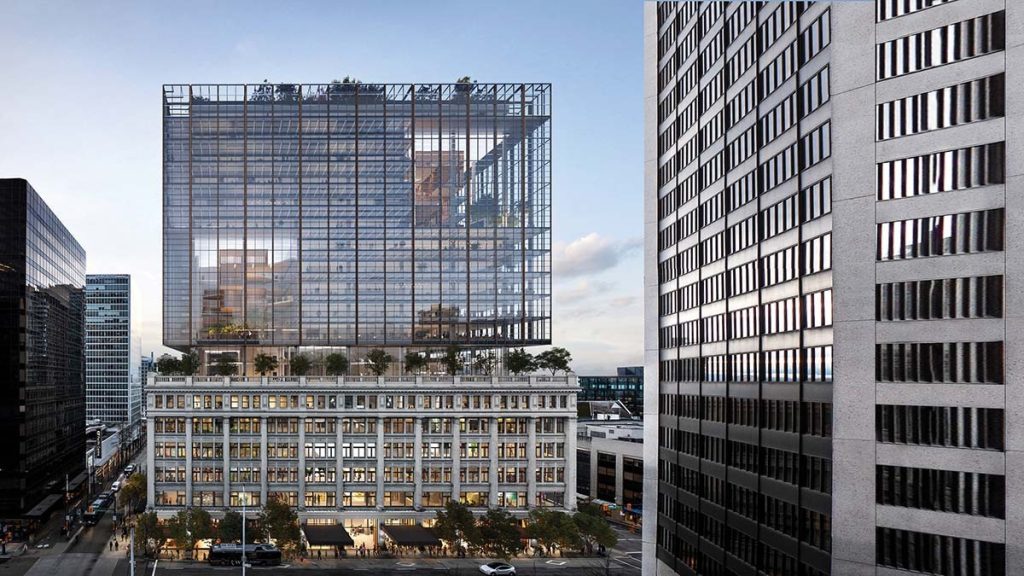
Hudson’s Bay Development, Vancouver, British Columbia, by Perkins&Will
The Hudson’s Bay store in downtown Vancouver is reimagined through a ‘living heritage’ strategy that respects its cultural significance while introducing 1,000,000 square feet of mixed-use office space. An “Uncommon Civic Centre” integrates a mid-block arcade, cycle hub, Sky Atria, and Roof Garden, strengthening connections between street, transit, and public life. Guided by passive strategies and 2050 climate models, the project redefines urban buildings as resilient civic assets.

